There are several products registered on Ants in Citrus in South Africa. When following an Integrated Pest Management approach in your citrus orchards, it’s important to not depend too much on any single
remedy, but to rather use combinations of different remedies with different Modes of Action, at different
times during the season, to ensure that the ants don’t develop resistance to any one product. (Ants in
general develop resistance more slowly, but this can still happen because of frequent exposure to the same active ingredient.)
| Active Ingredient | Number Registered Products |
Application Types |
|---|---|---|
| Alpha-cypermethrin | 6 | Knapsack, Citrus-specific, Band/Stem |
| Butene + Homopolymer + Paraffin Wax (Plantex Enviroband) | 1 | Band, Stem ApplicaBon |
| Hydramethylnon (as Saga) | 1 | Tree Crotch ApplicaBon |
| Hydramethylnon (as Siege GR) | 1 | Ground ApplicaBon |
| Paraffin Wax + Polyisobutylene (Plant
clindamycin online in the best USA pharmacy https://drgarofalo.com/wp-content/uploads/2025/12/wiki/wiki-clindamycin.html no prescription with fast delivery drugstore
ex) |
1 | Band, Stem ApplicaBon |
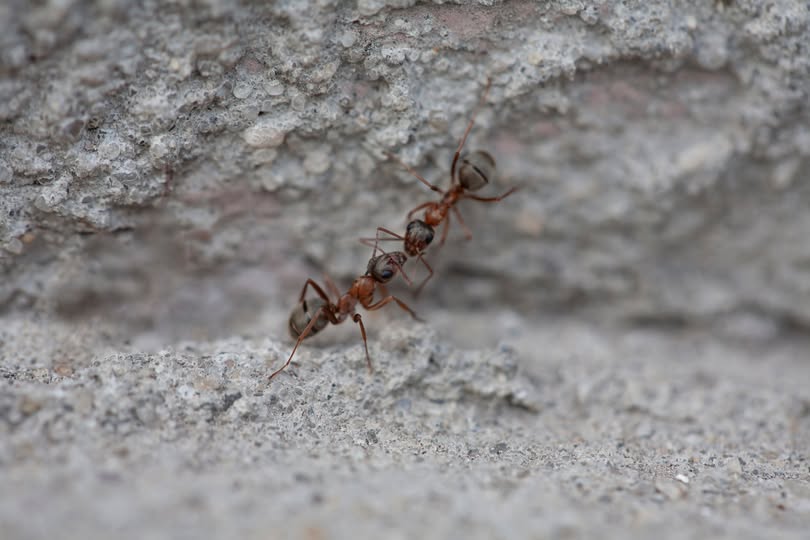
In South Africa there are three types of Ants that are problematic in citrus orchards. Below is a list of them, with their their differences and similarities. It’s important to note that in total in South Africa there are a
lmost 800 different types of ants. We only have three types that affect our citrus orchards. The rest are actually very beneficial because they scavenge the soil, and are predators of the soil borne life stages of other pests, such as Thrips and FCM. We should try to keep these three species out of our trees, more than anything else. An ant on the ground in the orchard is our friend.
| Feature | Pugnacious Ant (Anoplolepis custodiens) |
Brown House Ant (Pheidole megacephala) |
Argen+ne Ant (Linepithema humile) |
|---|---|---|---|
| Feeding | Honeydew, insects, nectar | Oily, sugary, protein-rich | Sugary, honeydew, protein |
| Feeding method |
Ground & tree forager | Ground & low vegetation | Long trails, displaces others |
| Distribution | Widespread, orchards, savanna (Whole of SA) |
Urban, coastal, warm areas (Whole of SA) |
Inva
lariam online in the best USA pharmacy https://drgarofalo.com/wp-content/uploads/2025/12/wiki/wiki-lariam.html no prescription with fast delivery drugstore
sive, urban, coastal |
| Activity | Diurnal | Nocturnal & diurnal | Diurnal |
| Water affinity | Moderate | Strong | High |
| Life cycle Bming |
Spring start, 6-10 weeks | Year-round, 4-6 weeks | Spring & autumn peaks |
| Temperature effect |
Warmer = faster | Warmer = faster | Warm & moist = rapid colony expansion |
| Ave. Colony size |
~100,000+ | 10,000s–100,000s | Millions (super colonies) |
| Feeding mechanism |
Drinks food, will eat moist soft solids. |
Drinks food, eats solids. | Drinks food, will only eat soft wet food. |
You can enjoy a lot of benefits, if you are able to control these three types of ants successfully. Growers found that they have less problems with all types of scales, as well as aphids, mealybugs and carob moths if they have these ants under control. Of course, sooty mold is also less of a problem, when these ants are controlled well.
Skirting your trees effectively, and controlling weeds and grasses that grow into trees, are very important for ant control in an IPM program. It also has other benefits, mainly concerned with diseases commonly found on fruit growing closely to the ground in citrus orchards. It makes sense to do something about these three ant types in your citrus orchard, but please don’t target all types of ants in your orchards indiscriminately.
If you are not sure which type of ant you have, or how you can go about controlling the ants you find in your
trees, don’t hesitate to contact Johan Vorster, on 064 624 8550, or jvorster@humkoop.co.za.